
If your music is played on radio, TV, or in public venues around the world, you could be earning neighbouring rights royalties. Many artists don’t realise these royalties exist, making them one of the most overlooked revenue streams in the music industry.
Let’s break down what neighbouring rights royalties are, how they work, and how independent artists can start collecting them.
What Are Neighboring Rights Royalties?
Neighboring rights are royalties due to performers and the recording copyright owners when their music is played in public.
Every track has two basic types of copyright attached to it. One relates to the composition of the song, known as the publishing rights, which protect the underlying melody and structure of a song. The other covers the recording of the song, known as the master rights.
Below is a breakdown of the different types of music royalties and who gets paid. Check out our complete guide to music publishing to learn more.
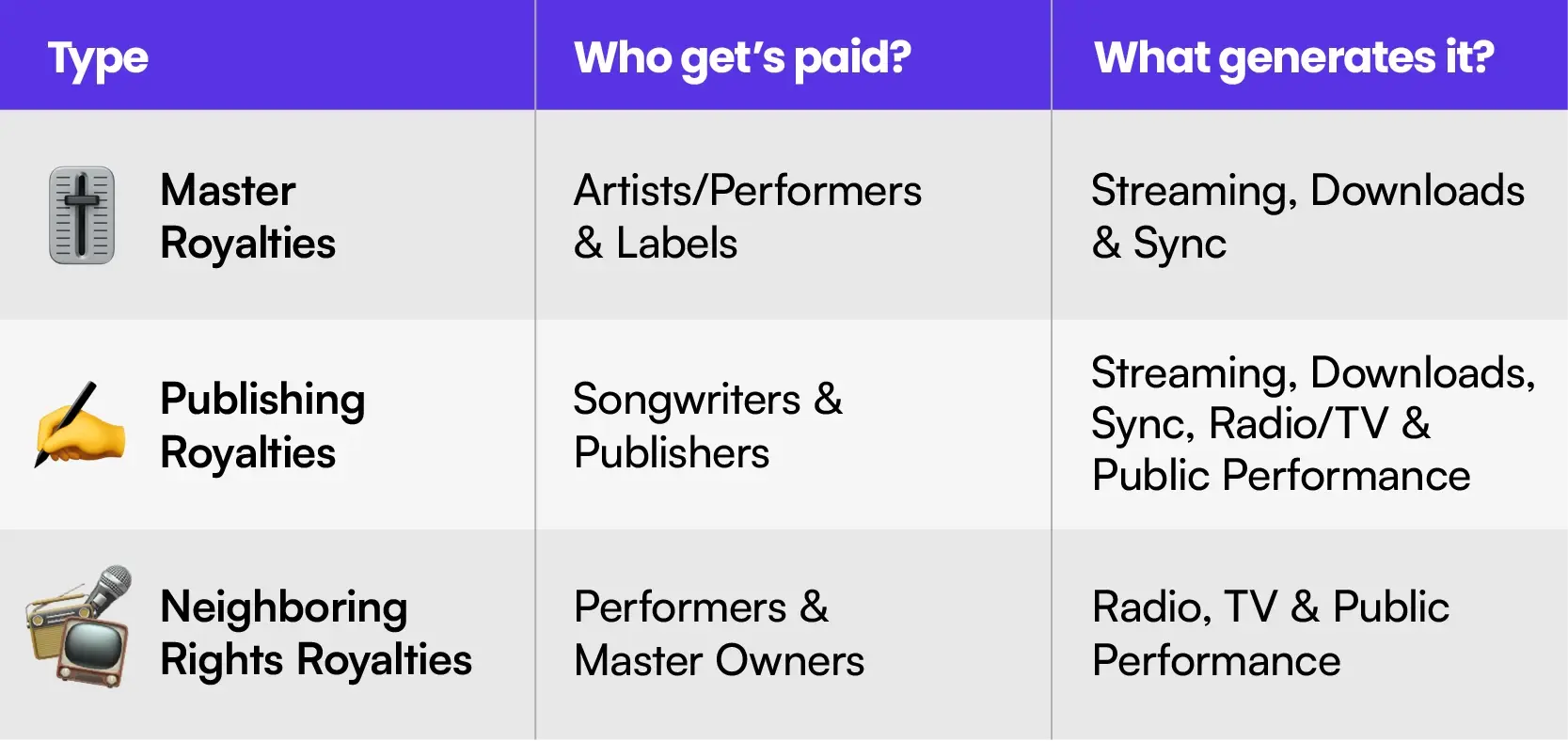
When a master recording is played in public, neighboring rights royalties are generated and paid to the performer, artist, plus any other owners of the master rights.
Examples include:
- Featured Artists - Lead performers credited on the track.
- Master Rights Holders - Usually record labels or artists who own their masters.
- Non-Featured Performers - Session musicians, background vocalists etc.
Now you know who receives neighboring rights royalties, let’s discuss how & why they’re actually paid out.
How Are Neighboring Rights Royalties Generated?
Neighboring rights are generated when recorded music is played on radio, TV, or in a shop, bar, club, or restaurant. The owners of the master rights are entitled to get paid whenever this happens.
Let’s take you through some examples:
Radio Airplay
Radio isn’t just a great promotion and discovery tool for your music, it’s also a potential earner. Whenever your music is played on the radio, it can generate neighboring rights royalties. These royalties are paid to the performers on the recording and the owner of the master recording whenever the track is broadcast publicly.
Depending on your region, you will earn royalties on terrestrial, digital and internet stations.
TV Broadcasts
If your music is used on television, for example in a show, advert, or broadcast, it can also generate neighboring rights royalties. These payments are triggered when the recording is broadcast to the public.
This differs from Sync Licensing which is a negotiated, upfront fee paid to artists that allows their music to be used alongside visual media. Learn more about sync licensing.

Music Played in Public Venues
When your music is played in public venues such as bars, restaurants, shops, gyms, hotels, clubs, events, and stadiums, neighbouring rights royalties will be generated.
Businesses and venues must obtain licences to play recorded music in public. These licences allow them to use music legally, and in turn generate royalties for the performers and master recording owners behind the tracks being played. This applies whether music is played in the background or as part of a live event.

Who Collects Neighboring Rights Royalties?
Neighboring rights royalties are collected by Collective Management Organizations (CMOs). These organizations track usage, collect fees from broadcasters, and distribute earnings. However, the organization you should register with depends on where you are based.
Here’s some examples:
- PPL (UK)
- SoundExchange (US digital radio)
- ADAMI (France)
- GVL (Germany)
If you can’t see your country, don’t worry, a simple Google search will tell you the relevant CMO for your region.
How Independent Artists Can Collect Neighboring Rights Royalties
Independent artists are entitled to neighboring rights royalties. If you own your masters and perform on your tracks, you may be able to receive both the performer and label or "rightsholder" shares, which can be a major earner for your music projects.
Here’s a step-by-step guide to get you started:
- Upload music through a distributor like Ditto Music.
- Get your ISRC codes - Most distributors generate ISRC codes automatically.
- Register with a collective management organization.
- Register the performers and master owner for the track. - Neighboring rights royalties are paid to both performers and the master recording owner. If you release music independently, you will most likely be both the featured artist and the master owner, meaning you may can get both shares of the royalties. However, you may need to register as both a "performer"and a "rightsholder" (label / master rights owner).
- Ensure your metadata is accurate - This includes: ISRC codes, artist name, track title, performer credits & master owner or label. Incorrect metadata can delay or prevent royalty payments.
- Collect royalties & receive payments.
Neighboring Rights Royalties FAQs
Do artists get paid when their music plays on the radio?
Yes, in most countries radio plays generate neighboring rights royalties for performers and master owners. However, if you are located in the USA, royalties are generated through digital radio only.
Are neighboring rights the same as publishing royalties?
No. Publishing royalties pay songwriters, while neighboring rights pay performers and master recording owners.
Do music distributors collect neighbouring rights royalties?
No, neighboring rights royalties are collected by collective management organizations specific to your region. However some distributors like Ditto Music are looking to offer this as part of their publishing service in the near future.
How much do neighboring rights royalties pay?
Neighboring rights royalties vary depending on factors such as the country, broadcaster, and frequency of airplay. Major radio stations and international broadcasts typically generate higher royalties than smaller or local stations.
Do I need to register to receive neighboring rights royalties?
Yes. Artists must register their recordings and performer details with a collective managament organization to receive royalties.

Join the conversation