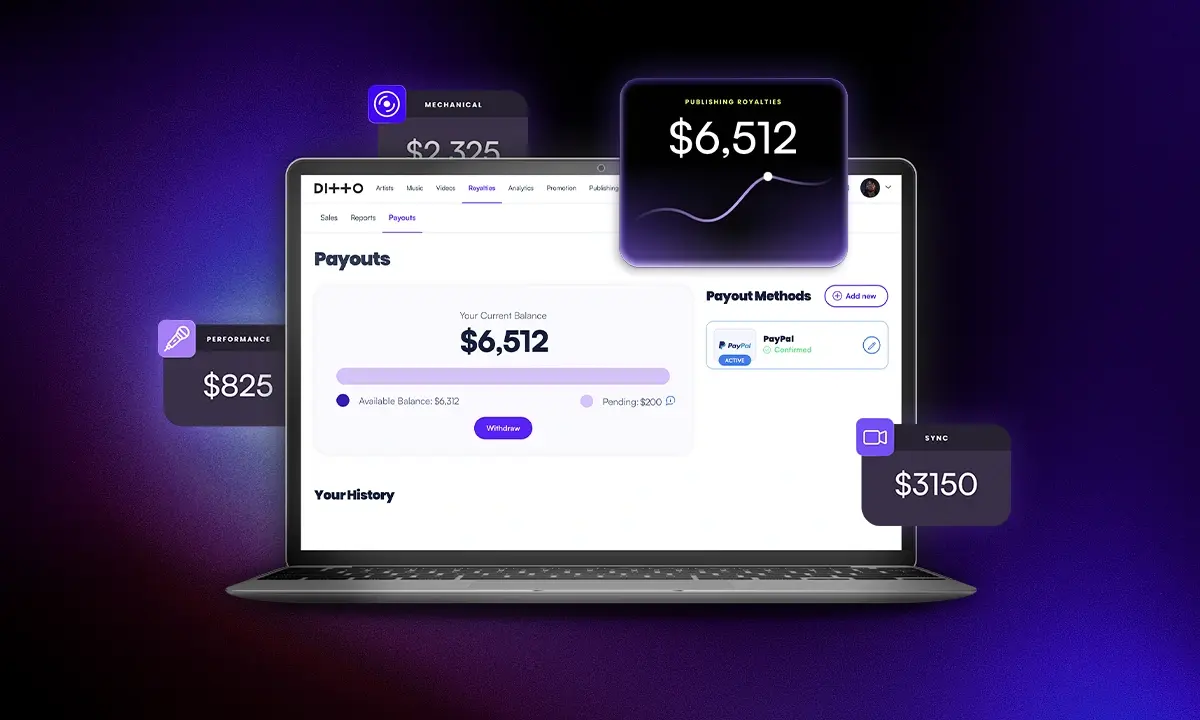
A maioria dos artistas independentes acredita que sua renda se resume às plataformas de streaming, como o Spotify e o Apple Music. Na verdade, a renda proveniente do streaming é apenas uma fatia do bolo dos direitos autorais. Toda vez que sua música é reproduzida em streaming, tocada no rádio, apresentada ao vivo, exibida na TV ou tocada em um café, academia ou loja, ela pode gerar renda para você.
O desafio é que muitos artistas não compreendem totalmente como esses royalties são gerados, arrecadados e pagos. Atualmente, os fundos de royalties não reclamados somam centenas de milhões de dólares em todo o setor, permanecendo nas mãos de detentores de direitos que nunca se registraram para recebê-los. Neste guia, acompanharemos a trajetória de uma música, desde o momento em que ela é utilizada até o momento em que os royalties chegam à sua conta, revelando as fontes de receita ocultas que todo artista independente deve conhecer e como garantir que você receba tudo a que tem direito.
Capítulos
1. O que são royalties musicais?
2. Direitos de autor vs. direitos de publicação
3. Como receber royalties musicais
4. Tipos de direitos autorais musicais
5. Como são cobrados os direitos autorais musicais?
6. Como funcionam os direitos autorais musicais?
7. Por que o registro de direitos autorais é importante
8. Como receber royalties por músicas
O que são royalties musicais?
Os direitos autorais musicais são um pagamento feito ao detentor dos direitos autorais de uma música sempre que esses direitos são utilizados. Cada reprodução por streaming, exibição no rádio, apresentação ao vivo, sincronização ou execução pública da sua música gera o direito a receber um pagamento, e cada uma dessas utilizações é monitorada, licenciada e cobrada por um órgão diferente do sistema de direitos autorais.
O que diferencia os direitos autorais musicais da maioria das fontes de renda é que eles constituem uma renda passiva. Isso significa que, uma vez que uma música seja composta e gravada, o detentor dos direitos não precisa fazer mais nada para continuar ganhando; a própria música dá conta do recado, desde que os registros necessários estejam em dia para que se receba o que é devido.
Essa é a parte em que a maioria dos artistas independentes erra: não o lado criativo, mas o administrativo. Uma música pode ser um verdadeiro sucesso e, mesmo assim, render ao seu criador apenas uma fração do que está rendendo, simplesmente porque ninguém informou às sociedades de gestão coletiva a quem deveriam pagar.
Direitos de autor versus direitos editoriais: qual é a diferença?
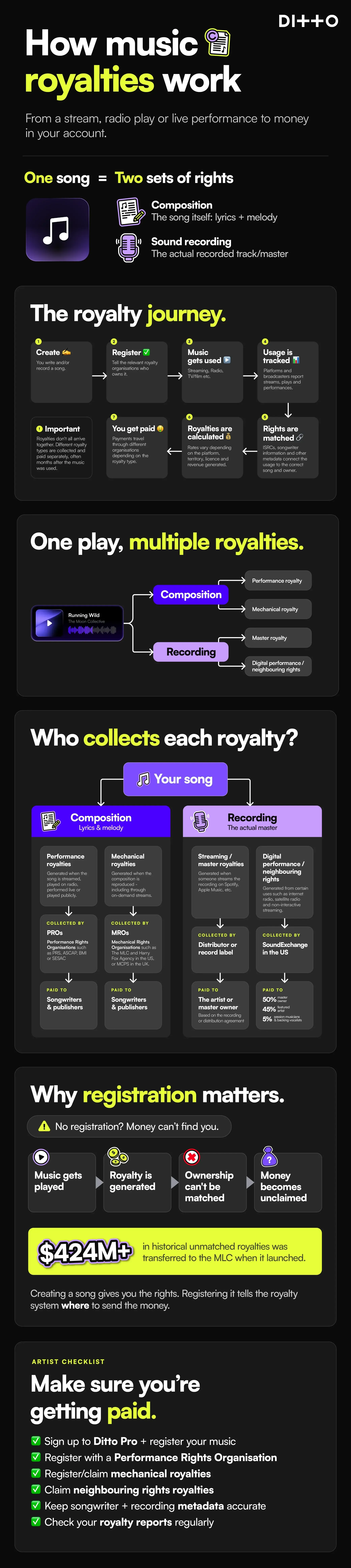
Um dos maiores equívocos sobre os direitos autorais musicais é que uma música tem apenas um direito autoral. Na verdade, toda música lançada comercialmente contém dois direitos autorais distintos, cada um capaz de gerar sua própria receita de royalties. Entender essa diferença é essencial se você quiser saber de onde realmente vêm seus pagamentos.
Os direitos autorais da gravação sonora (direitos sobre a gravação original)
A gravação sonora, frequentemente chamada de “master”, é a versão gravada propriamente dita da sua música. Os direitos autorais geralmente pertencem ao artista, à gravadora ou a quem quer que tenha financiado a gravação. Sempre que sua gravação for reproduzida por streaming, baixada, transmitida ou licenciada, o detentor do “master” pode ter direito aos royalties gerados por esse uso.
Os direitos autorais da composição musical (direitos de edição)
A composição musical é a própria canção. A letra, a melodia e o arranjo musical. Esses direitos autorais pertencem aos compositores e, muitas vezes, são administrados por uma editora musical. Você recebe royalties de edição sempre que sua canção é reproduzida em streaming, tocada ao vivo, transmitida, copiada ou licenciada, independentemente de quem seja o detentor da gravação original.
Por que isso é importante
Como toda música contém tanto uma gravação sonora quanto uma composição musical, um único uso da sua música pode gerar vários pagamentos de royalties ao mesmo tempo. Por exemplo, se sua música for reproduzida no Spotify:
- A gravação original gera royalties para o detentor dos direitos da gravação.
- A composição musical gera royalties de direitos autorais para os compositores.
O mesmo princípio se aplica quando sua música é tocada no rádio, apresentada ao vivo ou licenciada para a TV, cinema ou publicidade. Nem todo uso gera todos os tipos de royalties, mas compreender esses dois tipos de direitos autorais explica por que uma música pode gerar renda de muitas maneiras diferentes e por que um artista que acompanha apenas o extrato da distribuidora muitas vezes não tem uma visão completa da situação.
Como receber royalties musicais
Quando a maioria dos artistas pensa em royalties musicais, plataformas de streaming como o Spotify e o Apple Music costumam ser as primeiras coisas que vêm à mente. Mas o streaming é apenas uma das muitas maneiras pelas quais sua música pode gerar renda.
Sempre que sua música é reproduzida legalmente por streaming, transmitida, executada ou licenciada, ela tem o potencial de gerar royalties, e suas canções podem continuar gerando receita muito tempo depois do lançamento, em uma ampla variedade de setores e plataformas que muitos artistas nem sequer imaginam.
Aqui estão alguns dos lugares em que sua música poderia estar gerando renda para você:
- Estabelecimentos do setor de hospitalidade, como hotéis, cafés, restaurantes, bares e casas noturnas.
- Transmissões e espaços públicos, como no rádio, em lojas, supermercados e academias.
- Plataformas online como Spotify, Apple Music, YouTube, TikTok e Instagram. Se você quiser saber quanto suas músicas poderiam render, use nossa ferramenta gratuita calculadora de royalties nas redes sociais para estimar seus ganhos potenciais.
- Em filmes, na TV, em comerciais e em videogames.
- Aplicativos e outros serviços, como podcasts e música de fundo em geral.
- Outros usos menos conhecidos, que incluem eventos corporativos, exposições, ambientes educacionais e toques de celular.
Cada uso gera receita de maneira diferente, e os pagamentos de royalties variam de plataforma para plataforma. O próximo passo é entender quais tipos de royalties musicais são gerados quando sua música é utilizada.
Tipos de direitos autorais musicais
Nem todo uso da sua música gera o mesmo tipo de royalties. Dependendo de onde e como sua música é utilizada, diferentes direitos são acionados, gerando diferentes fontes de renda — arrecadadas por diferentes organizações, em prazos distintos, antes de, por fim, chegarem até você. Veja a seguir o que cada uma delas realmente representa.
Direitos autorais de downloads digitais e streaming não são a mesma coisa, embora sejam frequentemente confundidos. Um download gera um direito autoral mecânico único. Uma reprodução por streaming gera direitos autorais mecânicos e de execução recorrentes, pagos a cada reprodução, enquanto a música continuar sendo reproduzida.
Direitos autorais de execução pública Essas taxas são cobradas sempre que sua música é tocada em público, o que inclui streaming, rádio e TV, mas também situações cotidianas, como uma música tocando nos alto-falantes de uma loja ou de um local de eventos. Esses valores são devidos aos letristas, compositores e editoras. ASCAP e IMC Só essa entidade distribuiu US$ 3,229 bilhões aos seus membros no último exercício fiscal divulgado.
Direitos autorais mecânicos abrangem a reprodução, e não a execução; é por isso que são cobradas separadamente, embora muitas vezes sejam geradas pelo mesmo fluxo de transmissão. Toda vez que sua música é copiada (gravada em vinil, baixada ou transmitida), é gerada uma remuneração mecânica. Nos EUA, a alíquota é de aproximadamente 13,1 centavos por faixa para cópias físicas e downloads, enquanto os direitos de reprodução mecânica do streaming são calculados como uma porcentagem da receita da plataforma. Esses valores são devidos aos letristas, compositores e editoras.
Sincronizar royalties são o caso à parte nesta lista, pois não há uma taxa fixa. Cada acordo é negociado de forma individual e completa entre o supervisor musical e o detentor dos direitos ou sua editora; é por isso que uma única sincronização bem posicionada em um filme, anúncio ou grande série de TV pode render mais do que anos de receita com streaming. Um parente da sincronização que vem crescendo rapidamente é o direitos autorais de micro-sync: licenças menores e menos formais geradas quando a música é usada em conteúdo criado por usuários em plataformas como o YouTube e o TikTok, uma fonte de renda que a maioria dos artistas independentes nem imagina que exista. A renda proveniente da sincronização nem sempre é constante e A receita global com sincronização, na verdade, caiu 2% em 2025, para US$ 641 milhões, um bom lembrete para encarar isso como um bônus, e não como algo em torno do qual se deva planejar sua renda.
Royalties de direitos conexos são gerados quando sua gravação sonora — e não a composição — é transmitida ou executada publicamente, e são o tipo de royalties que a maioria dos artistas independentes nunca ouviu falar, muito menos registrou. Esses royalties devem ser pagos aos intérpretes participantes e a quem detém os direitos sobre a gravação original.
Outras taxas de licença abrangem usos comerciais específicos que não se enquadram perfeitamente nas categorias acima, como aplicativos, plataformas de meditação e fitness, serviços de karaokê e acordos de licenciamento específicos para cada plataforma. Esses acordos são normalmente negociados diretamente com a plataforma ou empresa envolvida, sendo os royalties pagos de acordo com o que estiver estabelecido no contrato de licença específico.
Como são cobrados os direitos autorais musicais?
O sistema de arrecadação de direitos autorais musicais é bastante abrangente. Diferentes entidades administram diferentes tipos de direitos autorais, atendem a diferentes titulares de direitos e operam sob diferentes normas jurídicas. Veja a seguir quem arrecada o quê e para quem.
ASCAP, BMI e SESAC ou PRS no Reino Unido arrecadam royalties de execução pública para compositores e editoras musicais. Elas concedem licenças a estações de rádio, serviços de streaming, casas de shows e todas as entidades que reproduzem música em público e, em seguida, repassam os rendimentos aos membros registrados, deduzidos seus custos administrativos. A ASCAP e a BMI têm distribuído, cada uma, mais de US$ 1 bilhão por ano desde 2017. Nada disso chega até você sem que você se registre primeiro como membro.
A Mechanical Licensing Collective (MLC) colete direitos autorais mecânicos de streaming para compositores e editoras, abrangendo plataformas sob demanda. Foi criada pela Lei de Modernização da Música de 2018. Antes da criação da MLC, os serviços de streaming costumavam pagar valores muito abaixo do devido — ou nem pagar nada —, pois os dados de propriedade em todo o setor eram uma verdadeira bagunça. A MLC foi criada especificamente para resolver essa situação, e as músicas precisam ser registradas diretamente nela para que os direitos autorais possam ser reivindicados. A MLC se aplica apenas aos direitos mecânicos nos EUA; no Reino Unido, MCPS desempenha uma função equivalente.
SoundExchange arrecada royalties de execução digital para artistas e gravadoras, especificamente provenientes de rádios pela internet, rádios via satélite e determinados serviços de streaming não interativos. Isso abrange os royalties de direitos conexos. Uma regra importante e frequentemente ignorada: a SoundExchange paga aos artistas mesmo quando eles não são donos de suas gravações originais. De acordo com a fórmula federal, direitos autorais por execução digital são distribuídos da seguinte forma: 50% para o detentor da gravação sonora, 45% diretamente para o artista principal e 5% para um fundo destinado a músicos de estúdio e backing vocals. Os artistas que cederam os direitos de suas gravações originais a uma gravadora ainda recebem essa parcela de 45% diretamente, por lei, mas somente se tiverem se cadastrado pessoalmente na SoundExchange.
Gravadoras arrecadam royalties de gravação das plataformas de streaming e pagam aos artistas de acordo com os termos de seus contratos de gravação, após recuperar quaisquer adiantamentos pendentes. Por causa disso, muitos artistas contratados não recebem nada de seus contratos de gravação por anos, mesmo enquanto suas músicas estão gerando uma receita real de royalties nos bastidores.
Editoras musicais receber royalties de composição das PROs e da MLC e pagar aos compositores com base em seus contratos de edição musical. A divisão é tradicionalmente de 50/50 entre a editora e o compositor, embora os contratos modernos de coedição e os acordos de autoedição tenham inclinado essa proporção ainda mais a favor do compositor.
No geral, o esquema é simples, embora o sistema pareça confuso. Os direitos autorais de publicação passam pela PRO e pela MLC; os direitos autorais de gravação, pela SoundExchange; e os pagamentos das plataformas, por meio de uma gravadora; e, para ter uma visão completa da renda, geralmente é preciso se cadastrar em várias dessas organizações ao mesmo tempo, e não apenas naquela que seu distribuidor por acaso administra automaticamente.
Como funcionam os direitos autorais musicais?
Os direitos autorais musicais não surgem do nada. Há um processo que se estende desde o momento em que uma música é criada até o momento em que o pagamento é efetivado, e cada etapa tem sua própria lógica. Aqui está um passo a passo de como isso realmente funciona.
1. A música é criada. No momento em que você compõe, grava ou salva uma música em qualquer formato fixo, ela fica automaticamente protegida por direitos autorais, e você não precisa registrar nada para que esse direito entre em vigor. Nos EUA, o registro só se torna necessário posteriormente, caso você precise fazer valer esse direito na Justiça. A partir do momento da criação, o compositor ou artista detém o direito exclusivo de controlar como a obra é utilizada, e esse direito é a base de todos os pagamentos de royalties que se seguem.
2. A música está registrada. A criação lhe confere o direito. O registro é a etapa separada que vincula esse direito ao sistema de arrecadação, e ignorá-la é a principal razão pela qual os artistas não recebem seus pagamentos. Na prática, isso significa se filiar a uma PRO para receber seus direitos autorais de execução pública, à MLC para os direitos mecânicos de streaming e à SoundExchange para os direitos conexos. Os direitos autorais que não podem ser atribuídos a um detentor de direitos registrado não ficam retidos indefinidamente; após um período de retenção, eles são redistribuídos a outros detentores de direitos.
Nos Estados Unidos, a proteção dos direitos autorais dura por toda a vida do criador mais 70 anos, no caso de canções de um único autor. Para obras criadas por encomenda, a proteção, por sua vez, dura 95 anos a partir da publicação ou 120 anos a partir da criação, o que ocorrer primeiro. O Reino Unido e a União Europeia seguem uma estrutura semelhante. Uma composição musical é protegida durante a vida do compositor mais 70 anos, enquanto os direitos autorais da gravação sonora duram 70 anos a partir da data em que a gravação foi publicada pela primeira vez, o que significa que uma música lançada hoje ainda poderá render royalties por bem mais de um século a partir de agora.
3. O uso é relatado. Cada reprodução em streaming, exibição em rádio e apresentação pública gera um registro de dados. Os serviços de streaming e as emissoras não pagam por música; eles enviam relatórios em massa que abrangem milhões de reproduções, os quais são então processados pelas sociedades de gestão coletiva.
4. A titularidade está em conformidade. Cada uso relatado precisa ser associado à música correta e ao detentor dos direitos adequado, por meio de identificadores como ISRCs e registros de compositores. É nesse ponto que os metadados se tornam realmente importantes; detalhes ausentes ou inconsistentes costumam ser a razão pela qual os royalties acabam sendo atrasados ou não são associados corretamente.
5. Os royalties são calculados. Não existe uma taxa única de royalties. Quanto o Spotify paga por reprodução é bem diferente do Apple Music, por exemplo, e é exatamente por isso que duas plataformas com números semelhantes de ouvintes podem gerar valores totais de royalties muito diferentes. O valor devido depende da plataforma, da localização do ouvinte, do tipo de licença e da receita gerada naquele período, e cada entidade de gestão coletiva realiza seu próprio cálculo.
6. Os pagamentos são distribuídos. O dinheiro flui da plataforma ou do local de exibição para a organização responsável pela arrecadação, depois para a gravadora ou editora e, por fim, para o artista ou compositor, de acordo com a divisão prevista no contrato. Como cada tipo de royalty passa por uma organização diferente, os pagamentos referentes à mesma música costumam chegar separadamente e em momentos distintos, geralmente mensalmente ou trimestralmente.
Todo esse processo leva tempo; é por isso que os royalties geralmente são pagos vários meses depois que sua música foi, de fato, reproduzida em streaming, transmitida ou licenciada.
Por que o registro de direitos autorais é importante
O sistema de royalties não retém dinheiro de propósito. Ele retém dinheiro de qualquer pessoa que não consiga identificar, e essa questão é mais ampla do que a maioria dos artistas independentes imagina.
Quando o MLC foi lançado em 2021, serviços de streaming como o Spotify e o Apple Music repassaram mais de US$ 424 milhões em royalties antigos que haviam se acumulado ao longo dos anos, mas que nunca foram atribuídos a um detentor de direitos. E não é como se esse problema tivesse sido resolvido da noite para o dia, pois, em 2023, o MLC ainda detinha cerca de US$ 164 milhões em royalties não reclamados, além de outros US$ 209 milhões que simplesmente não conseguiu associar a nenhuma música registrada.
Estima-se que compositores não registrados percam, em média, cerca de US$ 800 por ano cada um apenas em royalties mecânicos não reclamados; após um período de retenção, esses valores são redistribuídos às editoras registradas, em vez de serem devolvidos a quem realmente os ganhou.
Nenhum desses recursos se perde porque o sistema está com falhas. Eles ficam parados lá porque o detentor dos direitos nunca informou ao sistema quem ele era. Esse é todo o argumento a favor do registro: não se trata de burocracia por si só, mas da única maneira de realmente receber o que uma música já gerou.
Como receber royalties por músicas
Depois que seus royalties forem calculados, eles são pagos ao detentor dos direitos relevante, geralmente uma editora, gravadora, distribuidora musical ou diretamente a você, dependendo do tipo de royalty. Se você utilizar uma distribuidora musical, ela coletará e processará os royalties pelos quais é responsável e depositará seus ganhos diretamente em sua conta. Outros royalties, como os direitos autorais e os direitos conexos, são normalmente pagos separadamente por meio das organizações responsáveis por sua arrecadação.
Para garantir que você receba tudo a que tem direito, veja o que todo artista independente deve fazer:
- Divulgue suas músicas em todos os lugares.
- Inscreva-se diretamente junto a uma PRO.
- Reclame seus direitos autorais sobre direitos conexos.
- Recorra a uma editora musical para receba seus royalties de publicação.
- Mantenha seus metadados precisos.
- Acompanhe regularmente seus relatórios de royalties.
- Apresentar propostas para oportunidades de sincronização
Entender o processo de distribuição de royalties é o primeiro passo para ganhar mais com sua música. Quanto melhor você entender de onde vêm seus royalties e como eles são coletados, menor será a chance de deixar de receber o que lhe é devido.
Perguntas frequentes sobre direitos autorais musicais
Preciso de uma editora musical para receber todos os meus direitos autorais? Não, mas uma editora musical ou um administrador editorial ajuda você a receber os direitos autorais de edição que normalmente não são pagos pelo seu distribuidor. Se você recorrer apenas a um distribuidor, pode estar deixando de receber os direitos autorais de execução pública e mecânicos gerados pelas suas composições.
Por que meus pagamentos de royalties chegam em datas diferentes? Diferentes tipos de royalties são cobrados por diversas organizações em todo o mundo. Os rendimentos provenientes de streaming, direitos autorais, direitos conexos e sincronização seguem seus próprios cronogramas de declaração e pagamento; portanto, é normal receber vários pagamentos referentes à mesma música ao longo do ano.
Posso perder royalties se os metadados da minha música estiverem errados? Sim. Metadados incorretos ou incompletos dificultam que as organizações associem sua música aos detentores de direitos corretos, o que pode resultar em atrasos nos pagamentos, royalties não atribuídos ou royalties pagos às pessoas erradas. Garantir que seus metadados estejam corretos é uma das maneiras mais simples de proteger sua renda.
O que acontece com os royalties que nunca são reivindicados? Após um período de retenção, os royalties não correspondidos ou não reclamados são redistribuídos, normalmente a outros detentores de direitos registrados, e não são retidos indefinidamente em seu nome.
Participe da conversa